What to Expect From Live Wedding Music at an Orthodox Simcha
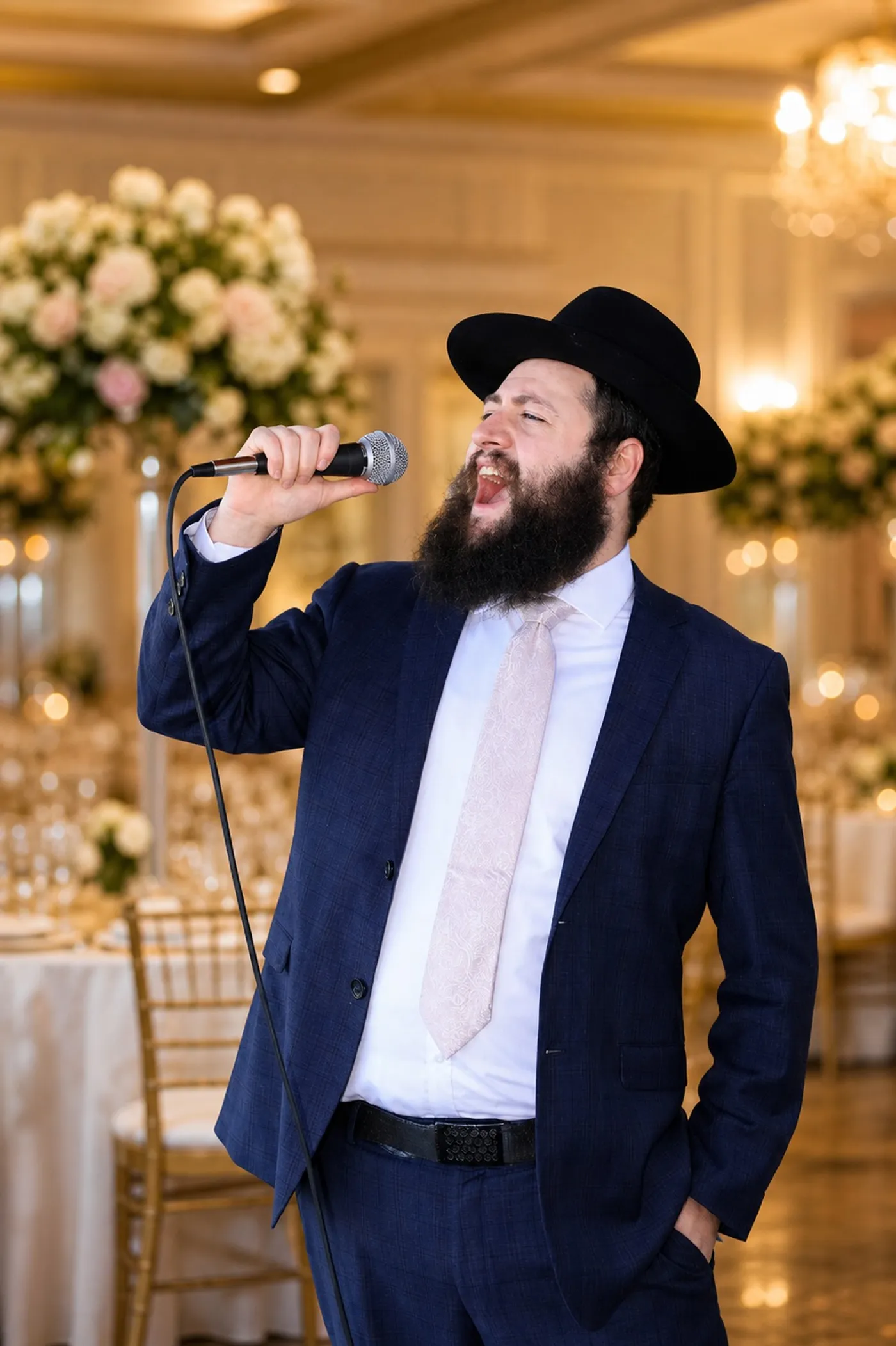
An Orthodox wedding moves through several distinct stages, and the music changes with each one. If you're planning your simcha, here's what the night typically sounds like from where I stand.
The journey begins: kabbalat panim and badeken
The evening opens quietly. During the kabbalat panim the chosson and kallah each receive guests, and the music is warm and atmospheric, often traditional nigunim that set a joyful but reflective mood. As the chosson is brought to the kallah for the badeken, the music builds the anticipation of the moment he lowers her veil.
The heart of the simcha: the chuppah
The chuppah is the most emotional part of the wedding, and the music has to honor that. These melodies are chosen with the family in advance, and they need to carry the solemnity of the ceremony. Then, the moment the glass breaks, everything turns. The music has to make that shift from stillness to celebration instantly.
Celebrating together: the seudah and dancing
During the meal the music sits in the background so families can talk. When the dancing begins it becomes high-energy, set after set. At most Orthodox weddings that means separate dancing for men and women, and a good performer keeps both sides of the mechitzah moving at the same time.
A personalized experience
No two families celebrate the same way. Some want Carlebach melodies under the chuppah, others want the newest Jewish hits on the dance floor, and many want both. The repertoire should reflect your traditions and your guests, which is why we build it together before your wedding.
If you're planning an Orthodox wedding in Brooklyn or the tri-state area, book a free consultation and we'll map out the music for your whole night.